SENIORS ENTERTAINER
VOICE TECHNIQUE
Musical entertainment for Senior Citizens. Tips, information, and useful links for entertainers, event organisers and activity directors. Senior citizen entertainment is a specialty.
First of all I have to tell you that this is a great resource for voice training.
How to sing and how to use your voice properly
Voice and singing lessons.
Unless you are already a very good singer, I strongly suggest that you take the time to 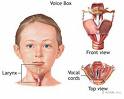 learn some vocal and singing technique.
There are those with perfect pitch, and most of us do not have it, but it can be learned.
There is the Pitch method and Perfect Pitch Ear Training
Your audience are made up of people with many years of life experience.
Although they may be polite about it they aren't stupid, and a bad singer won't make a very good impression therefore possibly no return engagements.
You can easily learn from an online course or a vocal coach.
I like the web courses as you can do it at home in your pajamas if you like.
There are several online video voice courses available.
Here is some basic information.
Breathing
Proper breathing matters to some extent. There are different schools of thought on this, however.
It shouldn't be an obsession that gets in the way of actually singing. Most important to me is that you have enough air to finish a phrase.
Be able to plan so that you don't have to take a breath in the wrong place.
Some people use breathing marks in the music. It should come naturally after you have sung a piece a few times.
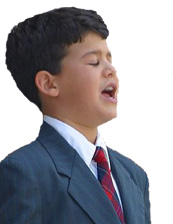
Posture and discipline are important to some extent.
Breathe comfortably and naturally as a baby does. If you notice a sleeping baby, their stomach rises and falls with each breath rather than their chest expanding.
Chest expansion takes more energy and will tire you out. You have to allow the expansion of the diaphragm on the bottom with the belly extension, so there is room to expand your lungs.
Some teachers will be adamant about the way that you stand.
They will ask you to have your legs apart about shoulder width, your knees slightly bent with one leg slightly forward your hands down and loose and standing with your head level.
Diction:
In regular speech, poor diction gives the impression of stupidity and isn't very interesting for an audience in general.
You can lose their respect and not realize why.
As for diction in singing, the way that you pronounce your words, both consonants and vowels is important.
Take some time to learn how to use the sounds of ooh's and ah's etc., and how to extend your vocal range.
Become familiar with the shape of lips, mouth and and level of your "Adam's apple" and how it affects your sound.
Avoid the strained notes that go out of tune so easily. It is very important to know your range that is the top and bottom notes that you can sing comfortably, and don't try to sing a song in whatever key it is written in or sung in by another person if it is at all uncomfortable.
You should transpose the song to your key so as to do the best with what your voice can offer. Try this web page to learn how.
http://www.rc123.com/how_to_transpose_a_song_chords.html
The open throat as if in yawning offers a larger chamber for a note to resonate in resulting in more tone.
Try pronouncing ooooh with a closed down smaller chamber in your mouth and a larger chamber as if yawning and you will immediately see the difference. Both are useful, but using only one style is weird.
The difference give us the variation and interesting character and inflections that normal voice has.
There are great resources available online for learning to sing that can be a great help to anyone.
Some offer a series of voice lessons and mp3's of recorded voice exercises to follow.
It's a way to see real improvement in a singing voice.
Good Luck
Roger is Rockin' it!